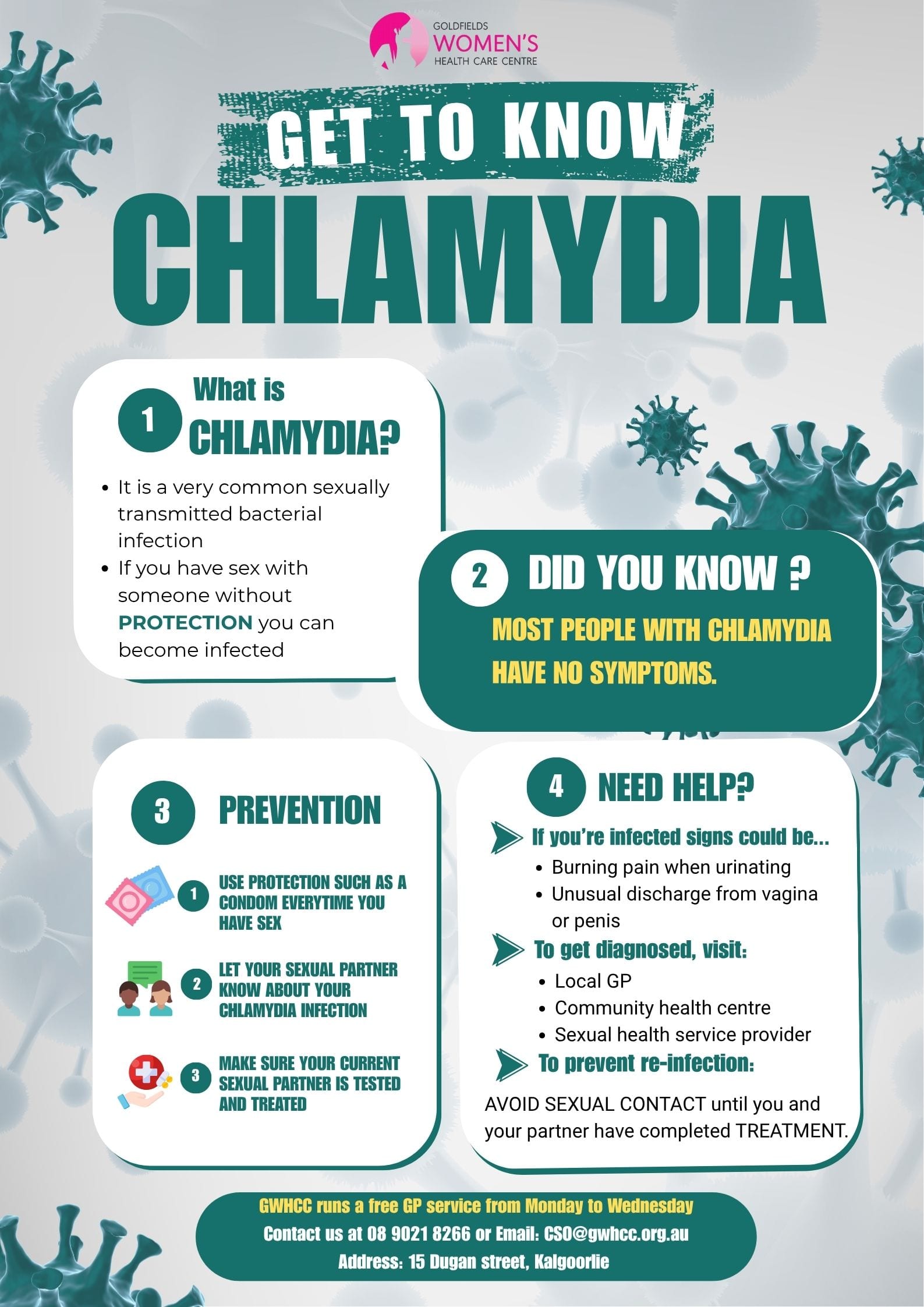
Chlamydia is a common bacterial infection that can be passed through sexual contact, especially when condoms or other
barrier protection are not used.
According to the Royal Australian College of General Practitioners, chlamydia is the most commonly diagnosed STI in Australia. There were 101,742 diagnoses
last year, with around half occurring among people aged 20–29.
Most people with chlamydia do not have any symptoms.
Burning or pain when passing urine
Unusual discharge from the vagina or penis
Vaginal bleeding, especially after sex
Pelvic pain
Swelling or pain in the testicles
Redness or irritation at the opening of the penis
Chlamydia can also cause inflammation in the genitals, cervix, urethra, rectum, throat, or eyes.
If you have had sex without protection and develop these symptoms or if you simply want a regular STI check, visit your GP, community health
centre, or sexual health service and ask about STI testing.
Chlamydia can also cause inflammation in the genitals, cervix, urethra, rectum, throat, or eyes.
If you have had sex without protection and develop these symptoms or if you simply want a regular STI check, visit your GP, community health
centre, or sexual health service and ask about STI testing.
If you are diagnosed with chlamydia, it can be treated with antibiotics.
To prevent getting chlamydia again, avoid sexual contact with your current or previous sexual partners until you have completed your
treatment and followed your healthcare professional's advice.
It is also important to tell your recent sexual partners about your chlamydia infection so they can get tested and treated if needed.
Need help? Our female doctors are here to support you, and our service is highly confidential.
cso@gwhcc.org.au
15 Dugan street, Kalgoorlie
08 9021 8266
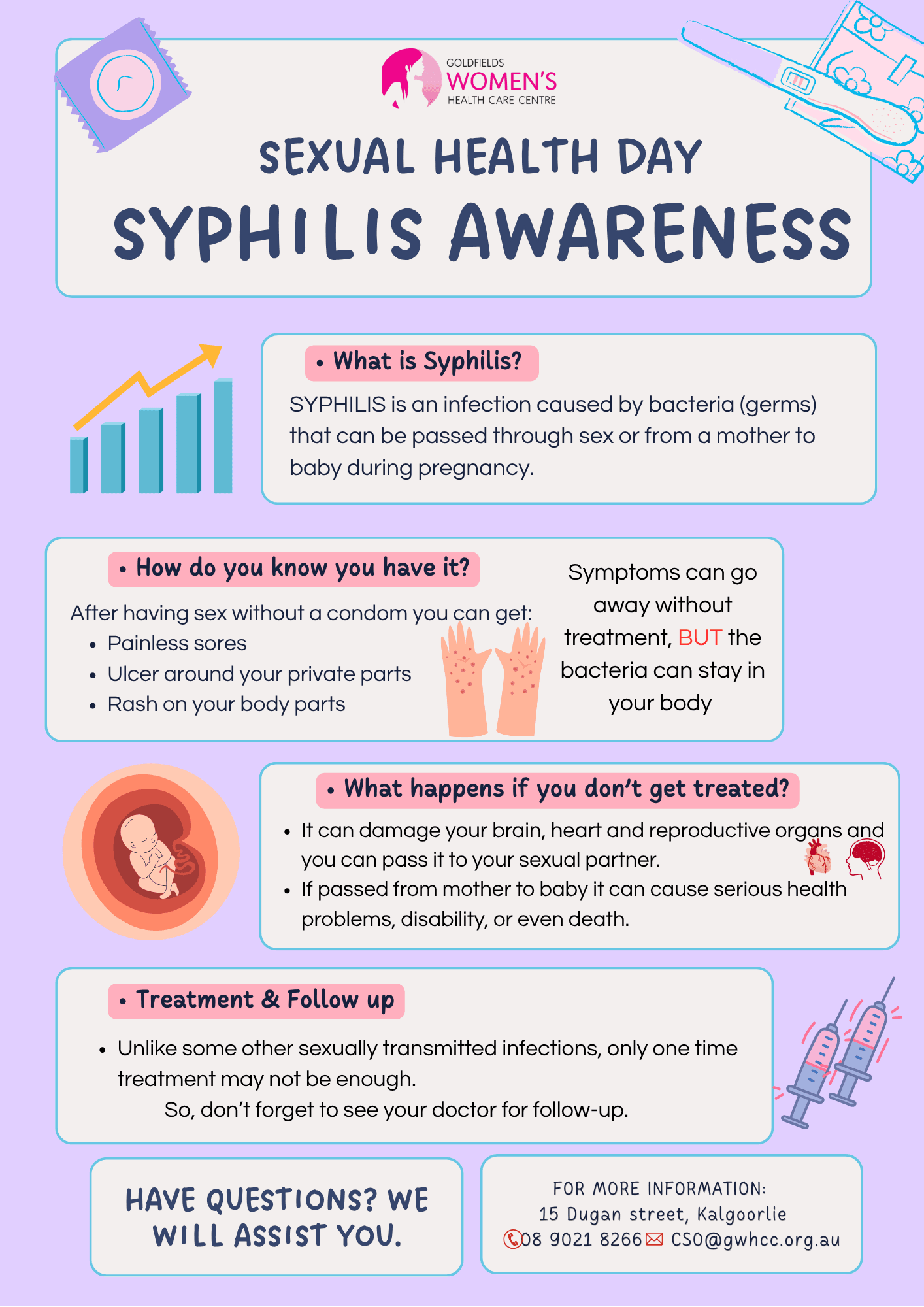
Did you know you can have a SYPHILIS with no symptoms?
SYPHILIS is an infection caused by bacteria (germs) that can be passed through sex or from a mother to her baby during pregnancy. In the
Goldfields–Esperance region, syphilis notification rate increased by 47% in 2023 compared to 2021-2022. After having sex without protection
you can get painless sore, ulcer or rash on your body parts.
Symptoms can go away without treatment BUT the bacteria can stay in yor body
Unlikely some other sexually transmitted infections only one time treatment may not be enough. So don't forget to see your doctor for
follow-up.
Other resources
This part features links to other websites that may be interest to clients, community groups and health professionals.
Please note: Providing a link to another website does not constitute GWHCC's endorsement or approval of the website, its
owners or operators, or any information, products or services offered on the website.
Your Toolkit is a comprehensive resource containing information to assist women and children facing domestic violence and financial abuse
transition to becoming independent, empowered and financially resilient. Your Toolkit is specifically tailored for their circumstance and
provides crucial information in relation to personal finances as well as other relevant information that will assist them on their journey
to independence.
Your Toolkit has a menu-based approach that makes information easy to access, not overwhelming and available when it’s needed.
Information is provided for different stages of the women’s journey:
• Preparing to Leave or “Prepare”;
• Time to Go or “Launch”;
• Things to do when you leave home – Early Days or “Nourish”; and
***********************************************************************************************
Please see below some other webinars/videos which may be of interest: